
THIS UNCHARTED WORLD
Wellington
Wellington is New Zealand’s harbour-side capital, suited to travellers who like walking between museums, small shops, coffee stops and the water. Give it time beyond a ferry connection: the everyday streets are part of the reason to come.
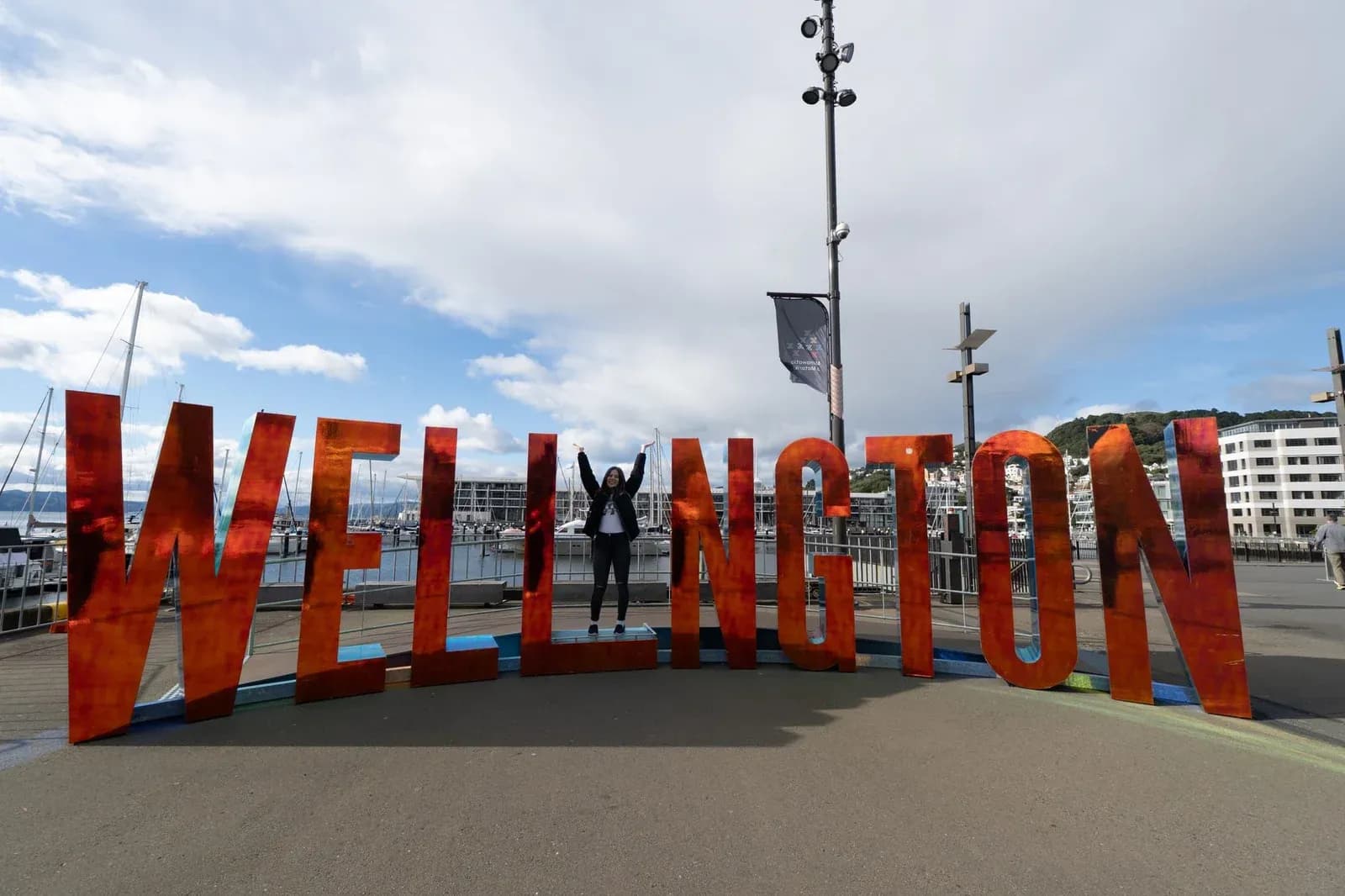
What Wellington feels like
We liked Wellington for the way a day could change direction. A ride uphill became a view over the harbour; a wander down Cuba Street became vintage shopping; a sunny spell pulled us towards the beach. There was enough to do without needing every stop to become a major event.
Our photographs tell much the same story: a red cable car, the Bucket Fountain spilling water, a takeaway cup held on a city pavement and food trucks along the waterfront. Wellington made sense to us on foot, with things to notice between the places we had set out to visit.
It is still a working city. Cuba Street felt a little rough around the edges, which was part of its appeal to us but will not suit everyone. If your idea of a holiday includes independent shops and pauses for coffee as well as scenery, Wellington gives you a useful contrast to a mountain-focused stay in Queenstown.
Getting there and getting around
Wellington Airport — 28 Stewart Duff Drive, Rongotai
The Airport Express links the airport with central Wellington and the railway station. Metlink currently describes a daily service generally running every 10–20 minutes, with different spacing early and late in the day. Check the timetable and special airport fare for your arrival, rather than assuming it uses an ordinary city-bus fare.
For a central stay, start by considering whether you need a hire car at all. The waterfront, Te Papa, Cuba Street and Lambton Quay can form walking days. Hills change the effort once you move away from the harbour, and wind can make a short distance feel less casual. Check walking gradients and bus alternatives if that matters to you.
If you are travelling between the islands by ferry, leave space around the crossing and follow your operator’s check-in instructions. Sailing timetables and disruption notices are date-specific. We would not squeeze a museum visit against a tight departure deadline simply because the two look close on a map.
When to go
A calm, sunny day is a reason to head towards the water. We saw people running, rollerskating, walking dogs and making use of the waterfront rather than simply photographing it. Our Oriental Bay visit included time on the sand. That is a record of one good day, not a promise of beach weather whenever you arrive.
Keep a museum plan available for a wet or windy spell and use a clearer window for the cable car view. A light waterproof outer layer earns its place in a day bag. Plan by the forecast once you are here rather than assigning the exposed walk to a particular day months in advance.
A Sunday morning is worth considering if the market interests you. It gives you a different view of the waterfront, with people buying produce alongside visitors looking for something to eat. Confirm any weather-related changes before setting out.
What to do
Wellington Cable Car — 280 Lambton Quay, via Cable Car Lane
The cable car is both a way uphill and a short outing in its own right. We remembered the red car, the LED-lit tunnels and the view at the top. It has been operating since 1902, but it is the change from the busy shopping street to the hillside that makes the ride feel useful on a first visit.
The current visitor fares are NZ$7 one-way and NZ$13 return for an adult. Cars normally run every ten minutes. Published hours are 7.30am–8pm Monday–Thursday, until 9pm Friday, 8.30am–9pm Saturday and 8.30am–7pm Sunday and public holidays, excluding Christmas Day.
Wellington Botanic Garden ki Paekākā — 101 Glenmore Street; also reached from Kelburn
The garden gives the cable-car journey somewhere to continue. Decide whether you want a return ride or a walk downhill before buying, taking your energy and the weather into account. The operator describes a roughly forty-minute walk back towards the city through the garden and cemetery route. Allow extra time if you want to stop along the way.
Cuba Street and the Bucket Fountain — Cuba Mall, Te Aro
Cuba Street was one of the places we most enjoyed simply wandering. We liked the vintage shops and the less polished feel. You do not need a shopping list to enjoy it, although leaving a little luggage space may be wise if second-hand clothes are your weakness.
The Bucket Fountain is a good place to pause and watch something slightly ridiculous happen. Our photograph catches the coloured buckets tipping water down into the basin. The street takes its name from the settler ship Cuba, rather than the country directly; the council’s heritage walk adds context to a shopping wander.
Iko Iko — 118 Cuba Street
Iko Iko was my favourite shop on our visit. That is a personal preference rather than a claim that everyone needs to buy something there. It is the sort of stop that makes an unhurried wander worthwhile: go in if the window interests you and leave time to look around.
The shop is still listed at the same Cuba Street address. Its published shop hours are 10am–5.30pm on weekdays and 10am–5pm at weekends. The separate office hours on the website are not the retail timetable.
Oriental Bay — Oriental Parade
Oriental Bay is a particular beach and neighbourhood on the harbour, not the name of the whole harbour. Our earlier article blurred that distinction. Follow the waterfront around towards the sand when the weather suits, then decide whether you want a walk, a sit-down or time on the beach.
What we liked was seeing how much ordinary life happened beside the water. Runners, dogs and people on wheels shared the space; the hired crocodile bikes were another part of the scene. We also remembered getting gelato near Frank Kitts Park, farther along the central waterfront. The original notes did not identify that shop, so we have not invented an address or claimed it is still trading.
Te Papa — 55 Cable Street
Te Papa is New Zealand’s national museum, and it earned its place in our trip even though a museum is not automatically everyone’s first holiday choice. We would give it a proper block of time. Trying to fit the whole visit between lunch and a transport deadline is a good way to leave feeling rushed.
Te Papa’s visitor information lists opening from 10am to 6pm daily except Christmas Day. Museum entry is free for New Zealanders and people living in New Zealand; international visitors aged sixteen and over pay NZ$35. Some exhibitions or events may have separate charges. Check what is showing during your stay rather than relying on an exhibition mentioned in an older travel post.
Old Bank Arcade — 233–237 Lambton Quay
The Old Bank Arcade made us stop for the building as much as the shops. It is a restored former bank, with the older architecture still doing much of the work. Our visit notes mention boutiques, food downstairs and the old vaults. Treat those as observations from that visit, not a guarantee of access to every basement space today.
The arcade’s website lists general hours of 9.30am–5pm Monday–Friday, 10am–4pm Saturday and 11am–3pm Sunday. Individual businesses can differ. It fits naturally into a Lambton Quay wander, including the cable-car entrance, without needing to become a shopping expedition.
Where to eat and drink
Harbourside Market — corner of Cable and Barnett Streets
The Harbourside Market is beside Te Papa, on the central waterfront rather than at Oriental Bay beach. We liked the mix of food trucks and everyday produce shopping. Fruit, vegetables and flowers were part of our visit, alongside the things you could eat while walking around.
WellingtonNZ confirms the Sunday market and its location. Our old article gave different winter and summer closing times; we could not confirm that exact seasonal timetable now. Aim for Sunday morning and check the organiser’s current notice for changes. Carrying something home for later can be as useful as choosing breakfast on the spot.
Coffee around Te Aro
Coffee was woven into our Wellington days. We remembered the smell of roasting beans in the morning and liked being able to stop during a walk. A flat white is an easy starting point if that is your usual order, but you do not need to turn it into a test of whether you are visiting correctly.
The photograph records a cup and the street where we were standing; it does not establish which business made the drink. Our original copy did not name the café. Rather than attaching an invented review to the visible shopfront, we have kept the photograph as a small piece of the day.
Garage Project Wild Workshop — 7 Marion Street
Wild Workshop combines a drop-in bar with brewery tours; our visit was for a drink, and the experimental beers were the attraction. A tour is a separate option, not a requirement for enjoying the bar. The current venue page advertises tours and events but its hours display is inconsistent with the bar offering. Check directly for drop-in hours on your date.
Fortune Favours — former visit at 7 Leeds Street
Fortune Favours was the other beer stop we recorded, and our photograph belongs to that visit. Its closure was reported in 2025. The address now has Garage Project Leeds St; we have not reviewed the new venue. Closure report.
Where to stay
For a first walking-focused visit, compare central accommodation around Te Aro and Lambton Quay. Te Aro puts you closer to Cuba Street and evening food; Lambton Quay may suit a quieter shopping-and-transport starting point. Look at the actual street and recent room information, because a neighbourhood name tells you little about noise in one particular room.
The map’s hills matter. A place that appears only a few streets away can involve a climb with luggage. Ask about access, lifts, parking charges if relevant, and the route from your arrival stop. Our source article did not review any hotels, so we are not presenting an untested accommodation list as personal experience.
How long to give it
We would allow two full days, or three if you want to move slowly and include a Sunday market. One day could cover the cable car, a waterfront walk and part of Te Papa, but it leaves less room for shops, coffee or a change in weather. Choose depth over trying to fit every address into a single loop.
Wellington also works as a pause between larger parts of a New Zealand trip. Compare our Christchurch guide for another city you can explore on foot, or browse the field notes while deciding how much city time belongs alongside your landscapes.
Frequently asked questions
How many days do I need in Wellington?
Two full days is our suggested starting point, with a third for a slower visit or a Sunday market. One day can work if you choose a few priorities and leave the rest for another trip.
Can I explore Wellington without a car?
Yes, a central Wellington stay works well with walking and public transport. Check hills, luggage access and your arrival connection when choosing accommodation.
Is Te Papa free for international visitors?
International visitors aged sixteen and over currently pay NZ$35 for museum entry. Entry remains free for New Zealanders and people living in New Zealand; check separate exhibition or event charges.
What can I do in Wellington when it rains?
Te Papa is a useful indoor option, with cafés and the Old Bank Arcade offering shorter stops. Save the exposed waterfront walk or hilltop view for a better weather window if possible.
When is the Harbourside Market?
The Harbourside Market takes place on Sunday mornings beside Te Papa. Check the organiser’s current notices for hours, weather changes or temporary moves before travelling there.
Places and addresses
Map points show general locations; use the address and current signs for access. Map data © OpenStreetMap contributors.
| Place | Address or access | Map |
|---|---|---|
| Wellington | Wellington, New Zealand | Map |
| Wellington Airport | 28 Stewart Duff Drive, Rongotai, Wellington | Map |
| Wellington Cable Car — city entrance | 280 Lambton Quay, Wellington | Map |
| Wellington Botanic Garden | 101 Glenmore Street, Wellington | Map |
| Cuba Street and Bucket Fountain | Cuba Mall, Te Aro, Wellington | Map |
| Iko Iko | 118 Cuba Street, Wellington | Map |
| Oriental Bay | Oriental Parade, Wellington | Map |
| Te Papa | 55 Cable Street, Wellington | Map |
| Old Bank Arcade | 233–237 Lambton Quay, Wellington | Map |
| Harbourside Market | Corner Cable and Barnett Streets, Wellington | Map |
| Garage Project Wild Workshop | 7 Marion Street / Furness Lane, Wellington | Map |
| Frank Kitts Park | Jervois Quay, Wellington | Map |
| Garage Project Leeds St / former Fortune Favours | 7 Leeds Street, Wellington | Map |
| Te Aro | Te Aro, Wellington | Map |
Details to check before travelling
- The old Harbourside Market summer and winter closing times could not be reconfirmed and have been removed.
- The gelato shop near Frank Kitts Park and the café that supplied the photographed drink were not reliably identified.
- Access to the Old Bank’s former vaults and the old downstairs food offering was not reconfirmed.
- Wild Workshop’s current drop-in hours could not be confirmed from its inconsistent website listing; the bar and tours are distinct offerings. Fortune Favours is retained only as a historical visit.
- Future transport fares, exhibitions, venue hours and weather need a fresh check close to your visit.
About the author
Jo — Jo writes for This Uncharted World, drawing on her travels around New Zealand with Barnaby.
Put a little context into your walk.
Explore the Ultimate Christchurch Walking Tour, or read our first-afternoon guide and Arts Centre notes.